Home › Government, Municipal, and Institutional Hydroseeding
We perform municipal hydroseeding in Houston, TX for city parks, county projects, schools, and public facilities. Our team is familiar with public bid processes, spec compliance, and documentation requirements for government and institutional work.
Legendary Hydroseeding Houston provides professional municipal hydroseeding throughout Houston, TX, Texas and the surrounding area. Our licensed, insured crew delivers safe, clean, on-time work with a free estimate before anything begins. Call 346-420-5672 or request your free quote.
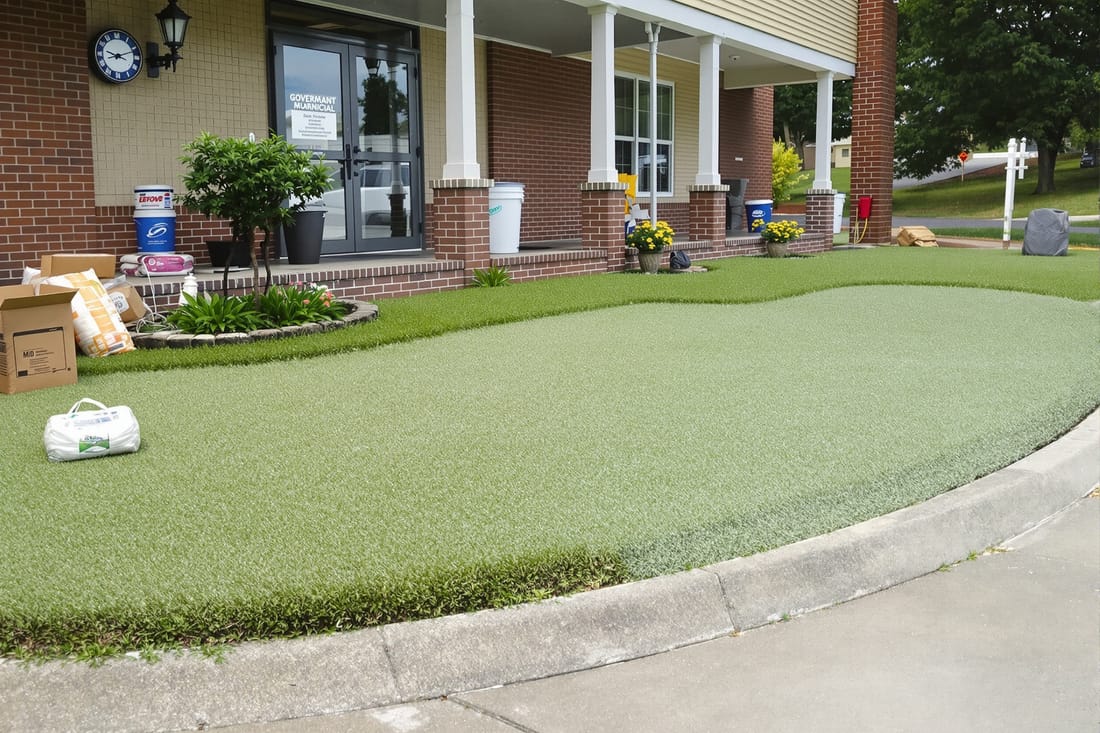
Municipal Hydroseeding for Houston’s Climate and Soils
Municipal hydroseeding in Houston needs to work with Gulf Coast weather and local clay soils, not fight against them. At Legendary Hydroseeding Houston, we design every mix and application schedule around our high heat, sudden thunderstorms, gumbo clay, and frequent construction disturbance.
For city right of way projects and institutional campuses, we start with a site walk to look at slopes, drainage patterns, bare subgrade, and any compacted areas from equipment traffic. In Houston, many municipal sites sit on cut-and-fill clay that sheds water, so we often recommend light surface scarification before hydroseeding to help seed and mulch key into the soil. Where there is existing vegetation, we determine whether to mow and overseed or fully strip and regrade.
Because local regulations and stakeholders vary, we go over your specific agency standards, TxDOT specs if applicable, and any city of Houston or Harris County requirements for erosion control or native plant use. For institutional sites like schools, hospitals, or university grounds, we also factor in public access, safety, and how quickly you need functional turf cover.
Hydroseeding here is not one-size-fits-all. On high-visibility medians, we might use an improved turf mix for uniform color. On detention basins and roadside swales, we favor deep-rooting natives and hardy grasses that tolerate both standing water and summer drought. Our team explains these tradeoffs in plain language so you know what you are approving and what performance to expect in Houston conditions.
How Government and Institutional Hydroseeding Is Actually Done
Once specifications and seed selections are approved, Legendary Hydroseeding Houston schedules work around both your project timeline and local weather patterns. In Houston, spring and early fall are often the best windows because soil is warm, but daytime highs are more manageable and natural rainfall is more reliable. That said, we routinely build schedules for mid-summer or winter work, we simply adjust materials and watering expectations.
On mobilization day, we bring a hydroseeding unit that matches the scale of your project. For a long municipal roadside, we may use a large mechanically agitated tank with a tower gun to reach across wide ditches and slopes. On institutional courtyards and athletic fields, we use gear that allows more precise, uniform coverage around hardscape and structures.
The slurry we apply is a controlled blend of seed, water, mulch, tackifier, and fertilizers or soil amendments where allowed by spec. Our crews measure each component, then agitate the tank until the mix is fully suspended. In Houston clay, we often add soil conditioners or gypsum when budgets and specs allow, to improve infiltration and root development.
Application is done in passes that overlap slightly, which helps avoid missed strips and thin coverage. On steep embankments, detention pond slopes, and channels, we use higher mulch rates and a stronger tackifier to keep the mat in place during sudden thunderstorms. Where slopes exceed your spec threshold, we may recommend combining hydroseeding with erosion control blankets or TRMs, pinning blankets first, then hydroseeding through or over them.
After application, we flag or mark key areas, verify coverage with the project contact, and go over post-installation irrigation and access control. For some government sites, we coordinate with your operations or parks staff to tie hydroseeding into existing irrigation controllers or temporary water truck schedules.
Seed Mixes, Materials, and Cost Drivers for Municipal Hydroseeding
The cost of municipal hydroseeding in Houston is driven by more than just acreage. When Legendary Hydroseeding Houston prices a government or institutional project, we look at access, slope, seed type, mulch rate, and performance requirements written into your specs.
Seed selection has one of the biggest impacts. Warm-season turf grasses, native prairie mixes, DOT-style roadside blends, and specialty erosion control mixes all come with different price points. If your municipality wants a blend heavy in native forbs for pollinator habitat near detention ponds or trails, that mix will typically cost more than a standard roadside turf, but it may reduce long-term mowing demands.
Mulch choice also matters. For many city and campus projects, we use wood fiber mulch at standard rates. For critical slopes, channels, or outfalls subject to heavy runoff, we often recommend a bonded fiber matrix (BFM) or a higher application rate of premium mulch. BFMs and heavier mulch rates cost more up front, but they dramatically reduce washouts in the kind of heavy downpours Houston sees every year.
Access and logistics affect cost as well. A long linear project along a road with good shoulder access usually prices lower per square foot than a tight campus courtyard where we have to run extra hose, protect existing landscaping, and work around pedestrian traffic. On some institutional sites, restricted hours, security checkpoints, and staging limitations also influence the total project cost and schedule.
Regulatory or internal standards play a role too. Some agencies require specific certified seed sources, minimum germination rates, or third-party testing of materials. Meeting those standards is straightforward, but we account for them openly when we prepare your estimate so there are no surprises during procurement or inspection.
Managing Erosion, Compliance, and Common Houston Site Problems
Government and institutional projects are held to a higher level of scrutiny for erosion control, water quality, and safety. Legendary Hydroseeding Houston structures each municipal hydroseeding plan to support your SWPPP commitments, local drainage criteria, and inspection checklists.
In Houston, the biggest early risk is heavy rain on freshly placed seed and subgrade. We reduce failures by timing applications around large storm systems when possible, using higher mulch and tackifier rates on vulnerable slopes, and, where appropriate, staging seeding in sections so runoff from an upper area does not destroy a lower area that was just treated.
Compacted clay from repeated equipment traffic is another common problem on city projects. Before hydroseeding, we often recommend a light tilling or scarifying pass, especially on athletic fields, large parks, or heavily used construction yards, to break the surface crust. This helps water infiltrate and gives roots a better path to establish. If compaction is not addressed, hydroseeding can still green up, but turf will be weaker and more prone to stress and erosion.
Poor drainage and standing water in detention basins, roadside swales, and low areas around campuses are also frequent issues. In these locations, we specify seed mixes that tolerate periodic flooding and long dry spells. We may hydroseed in stages around inlets and outfalls so that reinforcement is strongest where flows concentrate. For channels with known high velocities, we pair hydroseeding with rock check dams, turf reinforcement mats, or concrete structures according to your engineer’s design.
To support compliance, our team documents mix compositions, application dates, and weather conditions. For government clients, we can provide application maps, load tickets, and other records that your inspectors or program managers may request for audits or closeout.
What Houston Agencies and Institutions Should Know Before Hiring
Before you put municipal hydroseeding out to bid or award a contract, it helps to clarify a few key points that directly affect results and cost. Legendary Hydroseeding Houston often assists public works departments, school districts, and facility managers in shaping clear, realistic scopes.
First, define performance expectations in practical terms instead of vague language. For example, specify target coverage percentage at a certain number of days after installation, note slope segments that need enhanced erosion control, and identify any areas where quick green-up is more important than long-term species diversity. This helps us tailor mixes and mulch rates to what you actually need for each zone.
Second, think about access and timing. Let us know in advance about road closures, lane restrictions, security requirements, or school schedules that limit working hours. For larger municipal corridors, bundling multiple segments into one mobilization can reduce per-unit pricing. For campuses and hospitals, scheduling hydroseeding away from peak traffic times reduces disruption and safety risks.
Third, decide how establishment watering will be handled. Hydroseeding is not a set-it-and-forget-it process, especially in Houston summers. If you have irrigation systems, we coordinate run times and zones to match the new seed. If not, we can recommend practical watering schedules with water trucks or temporary irrigation, and we will be candid about what level of watering is realistic for your staff to maintain.
Lastly, ask about warranties and follow-up. On many government and institutional projects, we can build in an establishment period with site visits to monitor germination, identify problem spots, and recommend touch-up work if needed. Clear expectations on what is covered under the contract, and what counts as weather or use-related damage, prevent disputes later and help your agency or institution get the best long-term value from municipal hydroseeding.