Home › Stormwater Management Facility Hydroseeding
We provide stormwater facility hydroseeding in Houston, TX for bio retention cells, infiltration basins, and conveyance channels. Our vegetation systems support infiltration, control erosion, and help projects meet stormwater design and compliance goals.
Legendary Hydroseeding Houston provides professional stormwater facility hydroseeding throughout Houston, TX, Texas and the surrounding area. Our licensed, insured crew delivers safe, clean, on-time work with a free estimate before anything begins. Call 346-420-5672 or request your free quote.
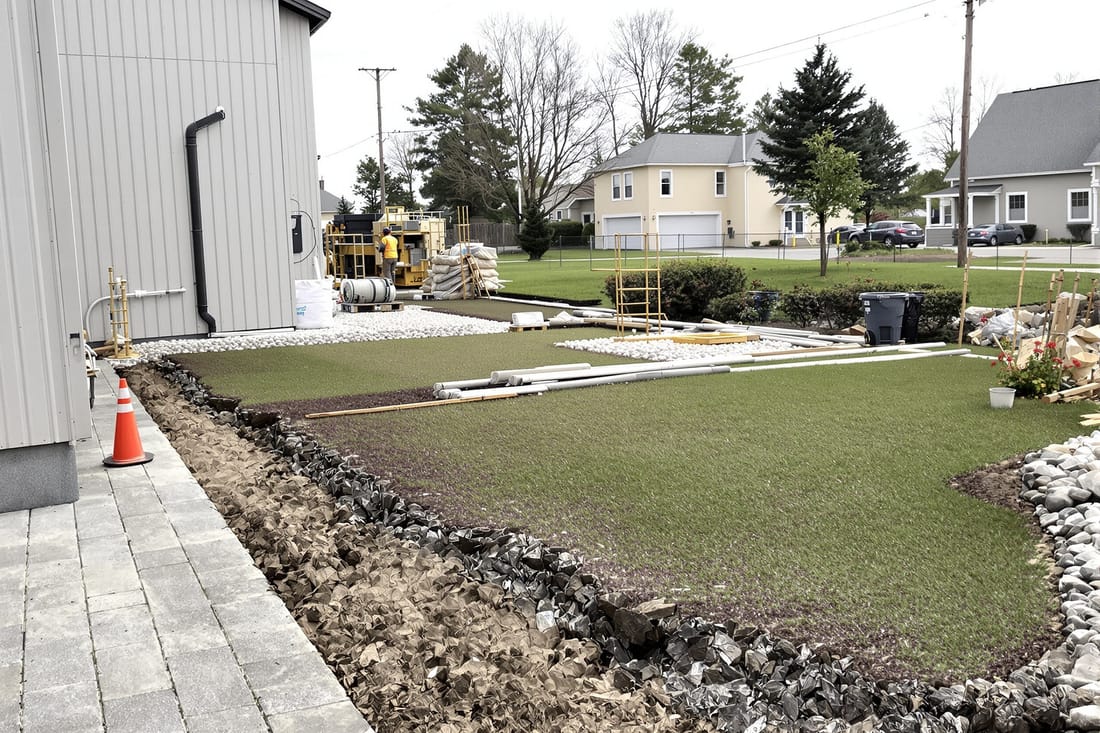
Stormwater facility hydroseeding solutions tailored to Houston
Stormwater management facilities in Houston work hard every time it rains, and the vegetation on those slopes and basins is your first line of defense against erosion and sediment discharge. At Legendary Hydroseeding Houston, we focus specifically on stormwater facility hydroseeding for detention ponds, retention ponds, outfall channels, bio-swales, and roadside ditches throughout the Greater Houston area.
Hydroseeding is not just spraying green mulch. It is a planned system of soil preparation, engineered seed mixes, stabilizing mulches, and binders designed for the steep grades and fluctuating water levels common in Houston stormwater features. Our goal is to establish dense, rooted vegetation that stays in place during heavy Gulf Coast storms, helps you stay in compliance, and reduces long-term maintenance costs.
We regularly work with commercial property managers, HOAs, industrial sites, and small developers that must meet City of Houston, Harris County Flood Control District, and TCEQ expectations for permanent stabilization. If your facility has failing sod, bare clay, or recurring erosion repairs, a correctly designed hydroseeding plan can be more durable and more cost effective than repeated spot fixes or constant re-sodding.
How hydroseeding a stormwater facility actually works
Every stormwater facility hydroseeding project starts with a site walk. We document existing vegetation, bare areas, soil type, side slopes, inlets and outfalls, and any current erosion issues. We note where mowers can safely operate and where access is limited, because that affects the hydroseeding equipment and techniques we use.
Next we handle site preparation. This may include light grading to knock down rills and gullies, scarifying compacted clay with rakes or shallow tilling so roots can penetrate, and removing accumulated construction debris that can block vegetation. In active ponds, we pay special attention to the waterline transition zone, where repeated wetting and drying can quickly strip away unprotected soil.
We then select a seed mixture suited to stormwater performance instead of just curb appeal. For Houston we typically blend warm season grasses like Bermuda or Bahia for deep rooting with faster establishing cover species like annual rye or millet for immediate stabilization. In shade or around outfalls we might add fescue or native wetland species, depending on your design requirements and maintenance plan.
The hydroseeding slurry is mixed on site. It includes seed, fertilizer (if appropriate for your soils and regulatory plan), fiber mulch for moisture retention, and tackifiers that help the material lock to steep banks. For critical slopes or high flow channels we may recommend bonded fiber matrix or flexible growth medium, which creates a stronger protective layer than standard mulch. Once mixed, we spray the slurry evenly over the prepared areas, adjusting pressure and nozzle type to avoid seed displacement in soft soils.
Materials, design options, and how they affect results
Stormwater facility hydroseeding is not one recipe for every pond. Legendary Hydroseeding Houston adjusts materials to match your slopes, soils, and regulatory needs. The main variables are seed mix, mulch type and rate, tackifier strength, and any erosion control blankets or turf reinforcement mats used in combination with hydroseeding.
For detention basins and gentle banks, a standard mulch rate with a warm season turf mix can be sufficient if mowing access is good. On steeper embankments, we increase mulch application rates and choose deeper rooted grasses or native species that can handle brief inundation. Around inlets, outfalls, and emergency spillways we often pair hydroseeding with erosion control blankets or high performance flexible growth mediums to withstand concentrated flows.
If your project has a specific landscape architect or engineer specification, we can match it or review it for constructability in Houston conditions. If you do not have a spec, we can propose one that considers your maintenance crew, irrigation or lack of it, and typical pond water levels. We also look at wildlife concerns, choosing species that discourage burrowing where that is an issue. All of these choices influence both initial cost and long-term performance.
Fertilization and soil amendments are another design lever. Many Houston sites sit on compacted clay with low organic matter. In those cases, we may add a starter fertilizer or soil conditioner to help roots establish, while still respecting TCEQ concerns about nutrient loading in stormwater facilities. The right amendment plan can shorten establishment time and reduce the risk of bare spots after the first heavy rain events.
Costs, timelines, and what drives your investment
For stormwater facility hydroseeding in Houston, costs are driven by several very specific factors: total square footage, average slope angle, total height of embankments, ease of access for hydroseeding trucks or hose work, and the level of erosion control materials required by the design or reviewing agency.
Areas that we can reach directly from the truck with short hose runs are more economical than sites that require long hose pulls around buildings or through tight easements. Steep or irregular slopes often need higher mulch rates, upgraded products like bonded fiber matrices, or blanket reinforcement, all of which increase material and labor cost but also substantially improve durability. If we must coordinate around existing utilities, standing water, or complex inlet structures, that affects production rates and scheduling as well.
Most projects move through three phases: assessment and proposal, site preparation and hydroseeding, and early establishment support. Typical detention or retention ponds can often be hydroseeded in one or two days once preparation is complete, although larger multi-basin sites can take several days. We schedule hydroseeding to avoid forecasted heavy storms when possible to protect your investment during the critical first week.
To keep costs predictable, Legendary Hydroseeding Houston provides written proposals that break out surface area, recommended products, and any optional upgrades like specialty native mixes or additional erosion control. If you need budgeting support for a phased project or for HOA board review, we can present base and enhanced options so you can weigh up-front cost against expected maintenance savings and regulatory risk.
Handling Houston specific challenges and compliance
Houston’s climate creates distinct challenges for stormwater facility hydroseeding. Intense downpours, long hot summers, and occasional drought periods can all impact germination and survival. We time seeding for the best possible windows in spring and fall when soil temperatures and rainfall patterns favor establishment. When projects must occur outside these windows due to construction schedules or notices of violation, we adjust species and mulch levels to compensate.
Local regulations also matter. While Legendary Hydroseeding Houston does not act as your engineer of record, we are familiar with stabilization expectations tied to TCEQ Construction General Permit requirements and Harris County Flood Control District guidelines for permanent vegetation cover. We seed with coverage and root density in mind so that when your inspector visits, they see more than a thin cosmetic green layer.
We pay close attention to inlet and outlet protection. Poorly stabilized areas around structures are a common reason for failed inspections, sediment build up, and undercutting. Our crews shape soil to shed water correctly into structures, then apply enhanced hydroseeding mixes and, where needed, blankets or rock armoring in direct splash zones. This combination helps reduce maintenance dredging and emergency repair calls after major storms.
For HOAs and commercial sites, aesthetics and access matter too. We work with your property manager or landscape vendor to align mowing strips, no-mow buffer zones, and safe access routes so that once the vegetation is mature, routine maintenance does not undo the stabilization work or violate any city or county buffer requirements.
What to expect when you hire Legendary Hydroseeding Houston
When you contact Legendary Hydroseeding Houston for stormwater facility hydroseeding, we start with questions about your site: age of the pond or basin, history of erosion or complaints, current vegetation conditions, and any notices from the city, county, or your engineer. From there we schedule a field visit, take measurements, photograph key problem areas, and confirm access for our equipment.
After the assessment, we provide a clear written plan that covers seed blend, mulch type and rate, any reinforcement products, and preparation steps. If you have upcoming inspections or permit deadlines, we can prioritize the most critical slopes or structures first. Once scheduled, our crew arrives with properly calibrated hydroseeding equipment, performs the agreed soil preparation, applies the slurry, and checks coverage around all high risk points like inlets and outfalls.
You also receive establishment guidance suited to Houston conditions. This includes watering recommendations if you have irrigation or temporary water access, mowing height and timing once the grass is tall enough, and what to watch for after large rain events. If small washouts occur in the first weeks, we can return to repair and reseed localized areas before they grow into larger problems.
Our aim is not only to get you through the next inspection, but to give your stormwater facility a vegetation system that holds up through many hurricane seasons. With a thoughtful design, quality materials, and local experience, stormwater facility hydroseeding can turn bare, eroding slopes into stable, low maintenance assets for your property.