Home › Hydromulching and Bonded Fiber Matrix
We offer hydromulching services in Houston, TX, including bonded fiber matrix applications for challenging slopes and channels. These high performance systems create a durable mat that resists heavy rain and protects bare soil until vegetation fully establishes.
Legendary Hydroseeding Houston provides professional hydromulching services throughout Houston, TX, Texas and the surrounding area. Our licensed, insured crew delivers safe, clean, on-time work with a free estimate before anything begins. Call 346-420-5672 or request your free quote.
Hydromulching & Bonded Fiber Matrix in Houston’s Real Conditions
Hydromulching and bonded fiber matrix are both spray-applied erosion control methods, but they are not the same thing. Hydromulching is typically used for grass establishment on moderate slopes and open areas, while bonded fiber matrix (often called BFM) is a heavier-duty product used where you need strong erosion control on steep grades, drainage swales, or highly erodible soils.
In Houston, you are dealing with clay-heavy soils, sudden downpours, and long hot spells. That combination makes it easy to lose topsoil and seed if the right materials and rates are not used. Legendary Hydroseeding Houston designs every hydromulch or BFM application around those realities. We adjust the mulch type, application rate, and seed mix for local conditions instead of just following a generic spec from a national brochure.
Hydromulching is usually the smart choice for residential lawns, new commercial landscapes, utility corridors, and gently sloped detention pond banks. Bonded fiber matrix comes into play when you have 3:1 or steeper slopes, channels that move water, pipeline right of way on a hill, bayou banks, or areas where you know a heavy storm could wash away loose soil.
Our focus is practical: Will this hold during a summer storm that dumps 3 inches of rain in an hour, and will the grass actually establish in Houston’s heat? Everything we do with hydromulching and BFM is aimed at a yes to both questions.
How Our Hydromulching Process Actually Works
Hydromulching is more than just spraying green stuff on the ground. At Legendary Hydroseeding Houston, every job starts with a site walk. We look at slope, soil type, shade and sun, drainage patterns, sprinkler coverage, and any existing vegetation. In Houston, we pay special attention to compacted clay and low spots that stay wet after storms.
If the soil is overly compacted, we recommend light tilling or scarifying so roots can penetrate. We remove rocks and debris that could interfere with even coverage. For most hydroseeding-grade hydromulch jobs in the Houston area, we use a mix of water, grass seed (Bermuda, Bermuda blends, or a custom mix that can include rye or zoysia by seed where appropriate), starter fertilizer, tackifier (glue-like additive), and cellulose or wood fiber mulch.
We load these materials into a mechanical agitation tank, mix to the manufacturer’s specified consistency, and then spray the slurry evenly across the prepared soil using hoses and nozzles sized to the job. On residential lawns and commercial landscapes, we aim for consistent coverage without heavy puddling, which can be an issue on Houston’s tight clay soils.
Seed rates and fertilizer are not one-size-fits-all. For example, we will use higher seed rates on high-visibility commercial sites along major Houston roads, and we adjust fertilizer blend if soil tests show phosphorus limits or sodium issues. Tackifier rates are increased if a storm is forecast within a few days after application.
After spraying, we provide watering instructions specific to Houston’s weather patterns. That typically means light, frequent waterings at first to keep the mulch mat moist, then longer, less frequent waterings once the grass sprouts. We also discuss how local water restrictions or sprinkler limitations may affect the schedule so you have a realistic plan.
Bonded Fiber Matrix for Steep Slopes & High-Risk Areas
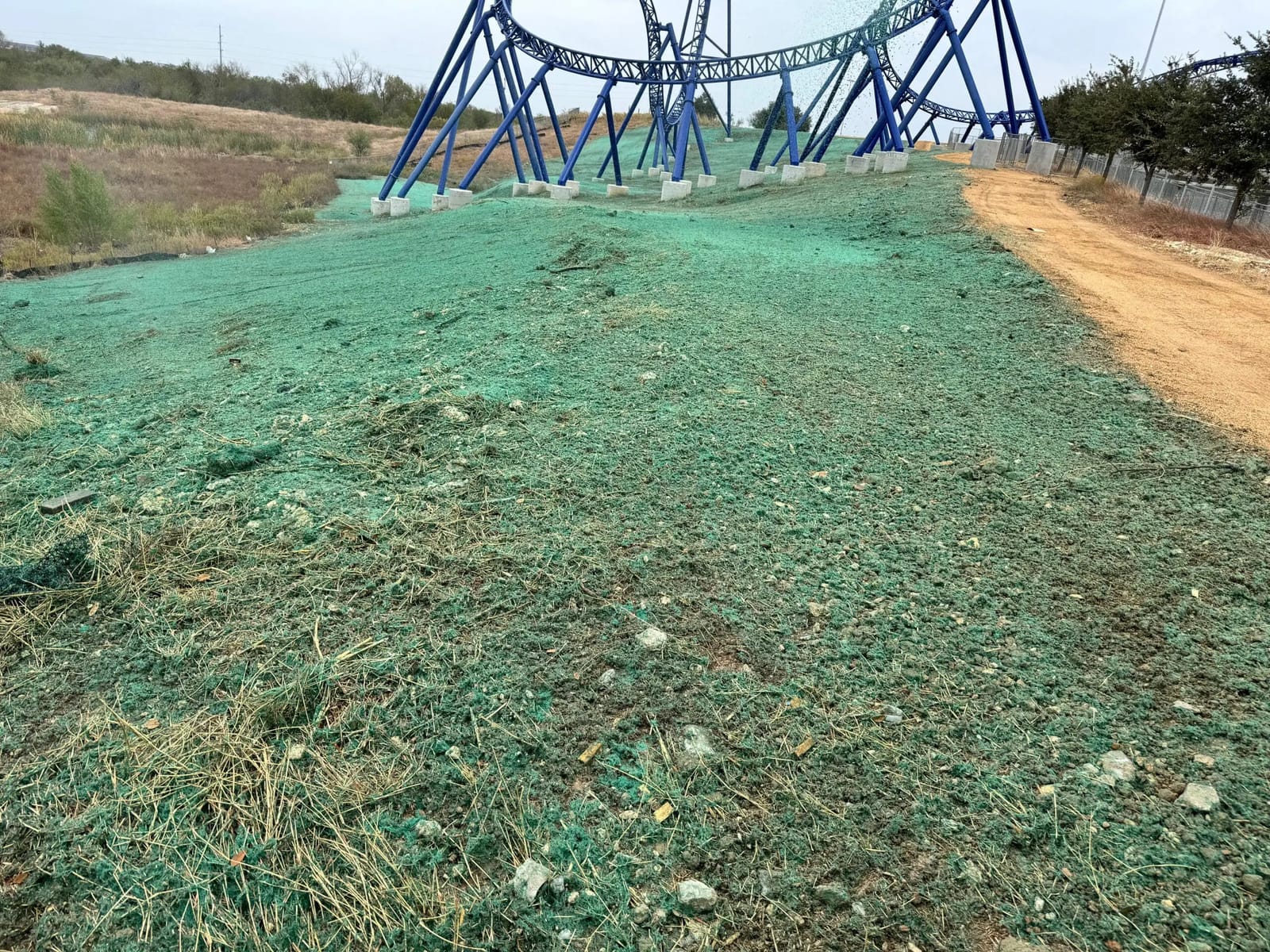
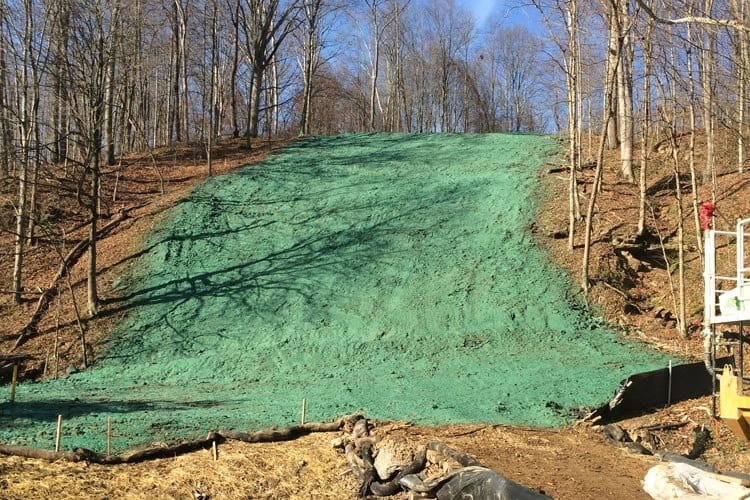
Bonded fiber matrix is the heavy-duty side of hydromulching. It uses longer wood fibers, higher mulch loading, and stronger binders to create a thick, flexible blanket that clings to the soil. In Houston, we use BFM where typical hydromulch would likely wash away: steep roadside slopes, detention pond embankments, bayou and channel banks, new construction with tall cut or fill slopes, or any area with concentrated runoff.
The process starts with the same site inspection and soil prep, but we are more strict about grading and removing ruts or gullies. Any channels where water will flow are shaped and compacted first. If there are active erosion rills, we fill and compact those before applying the BFM.
We then load the bonded fiber matrix product into a high-capacity hydroseeder that can handle the thicker slurry. BFM is applied at higher rates than standard hydromulch, commonly 3,000 to 4,000 pounds of material per acre or more, depending on slope steepness and soil conditions. That thicker application is what lets it resist heavy rain and sheet flow.
On sensitive Houston sites, like bayou-adjacent projects or energy and pipeline right of way, we may combine BFM with other measures, such as check dams, erosion control blankets in channels, silt fence, or temporary berms. The seed is usually included in the BFM slurry, but if a spec calls for it, we can seed separately and then cover with BFM.
A correctly installed bonded fiber matrix locks to the soil but stays porous, which allows moisture and air to reach the seed. Over time, the fibers break down and the vegetation takes over the job of erosion control. The goal is to bridge the gap between bare soil and a stable, rooted stand of grass in Houston’s variable climate.
What Drives Cost and Common Problems We Solve
Hydromulching services and bonded fiber matrix pricing in Houston is driven by several real factors, not just acreage. Slope and access are major ones. Flat, open areas close to truck access are less expensive per square foot than steep slopes that require long hose runs or special safety measures. More slope usually means heavier material rates and sometimes BFM instead of basic hydromulch, which increases cost.
Material choices also affect price. Pure wood fiber mulch and high-performance BFMs cost more than basic cellulose mulch, but they perform better under intense Houston rainfall. Seed mix choice matters too. A simple common Bermuda mix is cheaper than a custom blend with improved varieties or temporary nurse grasses like rye, but sometimes the more expensive seed is worth it to meet a timeline or spec.
Common problems we see in Houston include poor soil prep, sprinklers that do not cover all areas, and unrealistic expectations about how fast grass will grow in different seasons. If the soil is not graded correctly or is severely compacted, standing water after storms will drown seed and rot roots. We address this up front by recommending proper grading and, when needed, light tilling or soil amendments.
Overspray and property protection are another issue, especially in tight residential or urban commercial sites. Legendary Hydroseeding Houston uses shields and careful hose handling to keep material off driveways, siding, and neighboring property, and we clean up any incidental overspray while it is still wet.
Timing is also critical. In Houston, hydromulching cool-season grasses in the peak of summer or trying to establish warm-season Bermuda in a cold snap is a recipe for disappointment. We help you pick a realistic installation window and watering plan so the investment pays off.
Why Local Experience Matters for Hydromulching in Houston
Hydromulching and bonded fiber matrix work differently in Houston than they do in drier or cooler parts of the country. Our clayey Gulf Coast soils can crack in drought and turn slick in storms. Summer heat bakes shallow root systems, and intense thunderstorms can peel off poorly bonded mulch in a single event.
Legendary Hydroseeding Houston is built around those specific local challenges. We know, for example, that a detention pond slope in Katy may need a different approach than a bayou bank near Humble that sees more frequent high water, or a commercial pad in Pearland where construction traffic compacts soil at the last minute. We take that into account when we recommend hydromulching grades, BFM, or a combination approach.
We also work within typical Houston-area specs and inspection routines, which matters if you are trying to close out a commercial job, subdivision, or infrastructure project. That means matching or exceeding design requirements for mulch rates, seed mixes, fertilizer, and erosion control measures so inspectors sign off the first time.
For homeowners and small property owners, we take the time to explain the care schedule in plain language so you know exactly what to do after the truck leaves. This includes realistic expectations for germination time based on the season, how to adjust watering around Houston’s frequent watering restrictions, and signs that your new turf or slope is doing well or needs attention.
If you are considering hydromulching services or bonded fiber matrix anywhere in the greater Houston area, the main things you should look for are: a contractor who understands local soils and rains, uses the right materials for your specific slopes and goals, and is willing to talk through the plan instead of just quoting by the acre. That is the approach we follow on every project.